
Introduction
In today’s rapidly evolving industrial landscape,the ability to convert and control electrical power efficiently is more critical than ever.What is an industrial inverter?At its core,an industrial inverter is an electronic device that converts direct current(DC)into alternating current(AC),enabling industrial equipment to run on battery‑based or DC power sources.Unlike residential inverters,industrial inverters are built to handle high power loads,extreme environmental conditions,and continuous heavy‑duty operation.
This comprehensive guide explains everything you need to know about industrial inverters—how they work,where they are used,and why choosing a reliable partner like Voltruc makes sense.
How an Industrial Inverter Works
An industrial inverter takes DC power—typically from batteries,solar panels,uninterruptible power supplies(UPS),or DC busbars—and converts it into AC power with adjustable voltage,frequency,and waveform.It does not generate power itself but electronically switches DC input to produce AC output.The output can be single‑phase(for smaller equipment)or three‑phase(for heavy machinery),and frequency can be varied to precisely control motor speed and torque.
Advanced industrial inverters use insulated‑gate bipolar transistors(IGBT)with pulse‑width modulation(PWM)technology to achieve high efficiency,low harmonic distortion,and reliable operation under fluctuating loads.
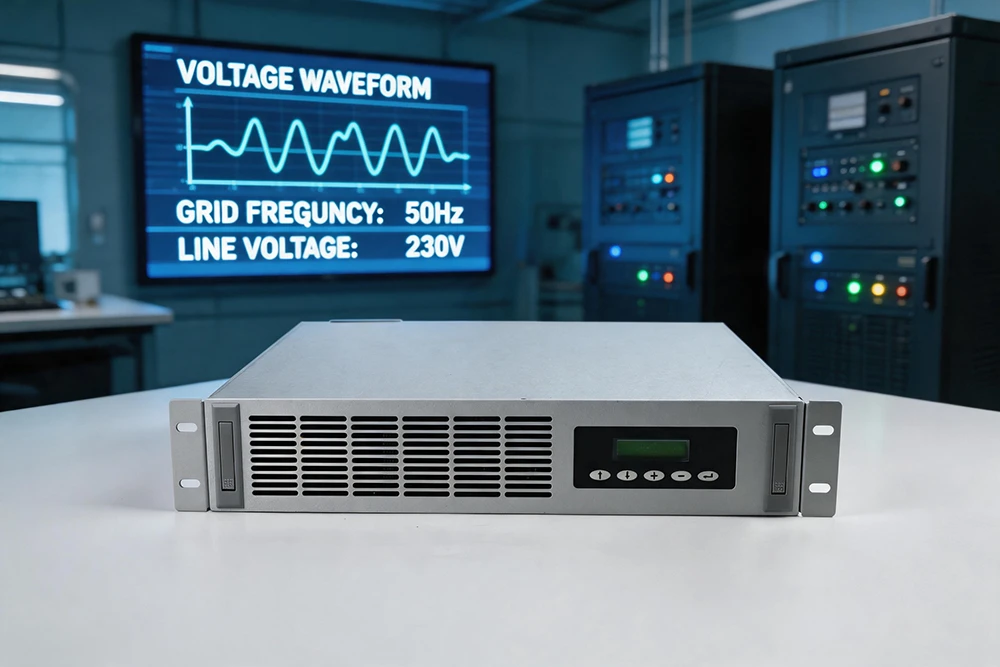
What Makes an Inverter“Industrial”?
Not all inverters are created equal.Several key features set industrial inverters apart:
| Feature | Industrial Inverter | Consumer Inverter |
|---|---|---|
| Power rating | Up to hundreds of kW/MW | Typically under 10 kW |
| Construction | Rugged, metal‑enclosed | Lightweight, plastic housing |
| Environmental rating | IP20–IP66 (dust/water‑resistant) | IP20–IP30 |
| Operating temperature | Wide range (-40°C to +60°C) | Limited range |
| Control features | VFD, vector control, PLC integration | Basic On/Off |
| Lifespan | 10–20+ years | 5–10 years |
Industrial inverters are engineered for reliability,continuous duty cycles,and the ability to withstand vibration,dust,humidity,and temperature extremes found in factories,power plants,and outdoor installations.
Key Applications of Industrial Inverters
Industrial inverters serve as the backbone of modern industrial automation and power management across virtually every sector.
Manufacturing&Process Industries
In manufacturing plants,industrial inverters are critical components of variable‑frequency drives(VFDs)—devices that precisely regulate the speed of AC motors in pumps,fans,compressors,conveyors,mixers,and extruders.By adjusting motor speed to match actual demand,inverters can reduce energy consumption by 30%to 50%compared to fixed‑speed operation.

Renewable Energy Integration
As solar and wind power expand globally,industrial inverters play a vital role in converting the DC electricity generated by solar panels or wind turbines into grid‑compatible AC power,enabling factories and commercial facilities to harness clean energy.Hybrid inverters now integrate PV generation,battery storage,and grid management for maximum energy efficiency.
Electric Vehicle(EV)Infrastructure
The rise of electric vehicles has created strong demand for industrial inverters in charging stations and EV powertrains.These inverters must handle high voltages,deliver efficient power conversion,and operate reliably in demanding outdoor environments.
Telecommunications&Railway Systems
Industrial inverters are essential for railway signalling systems,telecommunications infrastructure,utility networks,and in‑vehicle power conversion where reliable AC power must be supplied from DC battery banks.
Oil&Gas,Mining,and Heavy Industries
In the oil and gas sector,chemical processing,mining,and metallurgy,industrial inverters power electric submersible pumps,drilling equipment,crushers,and ventilation systems.These applications demand rugged,hazardous‑location‑rated equipment capable of operating in remote,harsh environments.
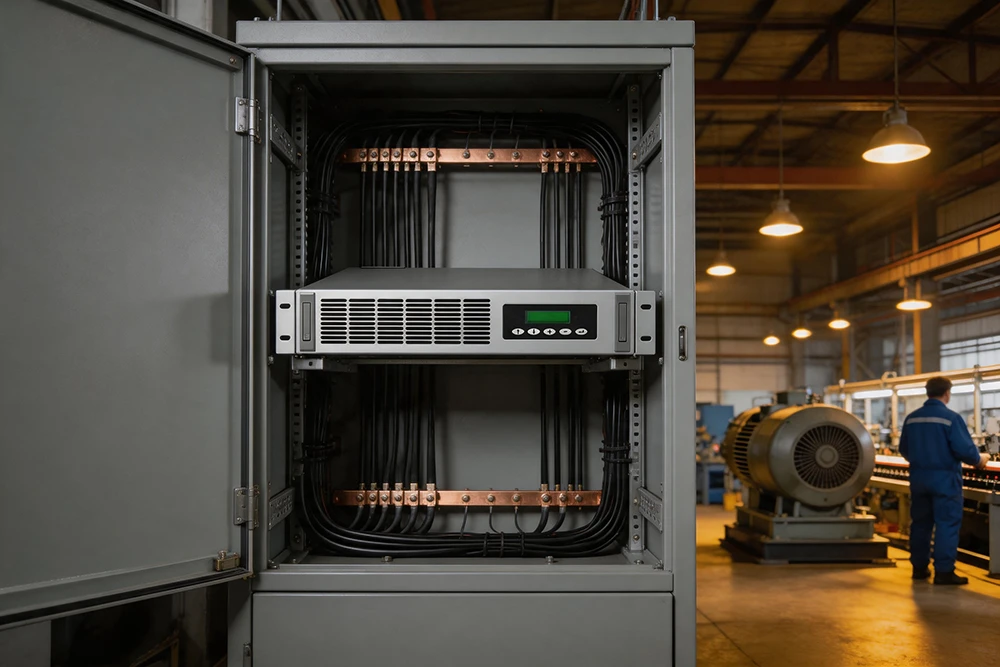
Industrial Inverter Market Growth
The global industrial inverter market has been growing steadily in recent years.This growth is driven by the increasing adoption of industrial automation,stricter energy efficiency regulations,and the rapid expansion of renewable energy projects such as solar and wind power.
As factories and industrial facilities continue to modernize their equipment,the demand for reliable power conversion solutions—especially industrial inverters—is expected to remain strong.The Asia‑Pacific region currently represents the largest share of the market,followed by North America and Europe,due to the concentration of manufacturing activities and ongoing infrastructure upgrades.
Why Choose Voltruc for Industrial Inverters
When you need a dependable industrial inverter,Voltruc provides two essential advantages:good quality and fast delivery.
- Good quality–Voltruc holds ISO 9001:2015 and ISO 14001:2015 certifications.Their manufacturing facilities(Shenzhen,Zhongshan,Vietnam,Taiwan)follow strict quality control processes,and each inverter is tested to meet international standards for industrial use.
- Fast delivery–With large‑scale production capacity and a responsive supply chain,Voltruc can fulfill orders quickly.This helps minimize downtime when you need replacement units or expansion equipment.
Conclusion
Industrial inverters are indispensable in modern industry—from manufacturing and renewable energy to telecommunications and EV infrastructure.Understanding what an industrial inverter is helps you make better decisions for your power management needs.
If you need an industrial inverter that combines reliable quality with fast delivery,Voltruc is a practical choice.Contact Voltruc to discuss your requirements.