
In the telecommunications industry,reliable power backup is not a luxury—it’s a necessity.A Telecom Inverter plays a critical role in converting DC power from batteries into stable AC power for sensitive telecom equipment.Choosing the wrong inverter can lead to network downtime,equipment damage,and high maintenance costs.
This guide will walk you through the key factors to consider when selecting a Telecom Inverter,what to look for during the purchasing process,and why Voltruc stands out as a trusted brand for telecom applications.
What Is a Telecom Inverter and Why Is It Different?
Unlike standard inverters used in homes or offices,a Telecom Inverter is specifically designed for the rigorous demands of telecom base stations,data centers,and remote communication shelters.These inverters must handle:
- Wide input voltage ranges(typically 24V,48V,or 110V DC)
- High surge currents from radio equipment
- Extreme temperatures and harsh environmental conditions
- 24/7 continuous operation with minimal ripple noise
Using a general-purpose inverter in a telecom setup often results in unstable output,RF interference,and premature failure.

Key Factors to Consider When Choosing a Telecom Inverter
1.Input Voltage Compatibility
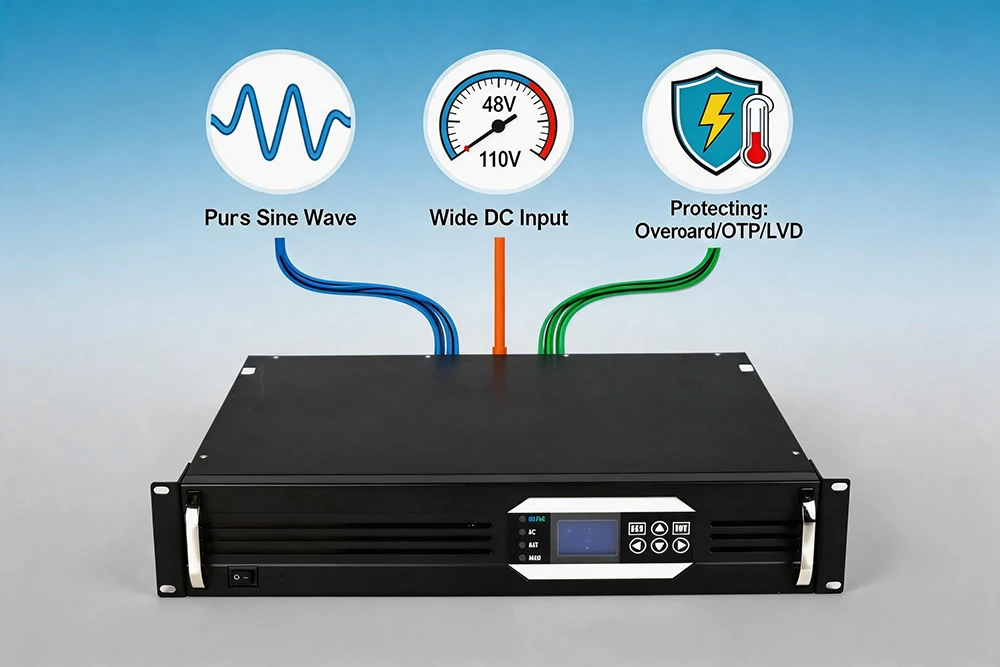
Telecom sites commonly use DC battery banks of 24V,48V,or 110V.Your Telecom Inverter must match the nominal voltage of your existing battery system.A mismatch will either fail to power the inverter or damage it.Always check the inverter’s DC input range—quality models offer a wide tolerance(e.g.,40–60V for a 48V system).
2.Pure Sine Wave Output
Telecom equipment is sensitive to power quality.Pure sine wave output is non-negotiable because it mimics utility power,ensuring safe operation of switches,routers,and transceivers.Modified sine wave inverters can cause data errors,overheating,and audible humming.Verify that the inverter’s total harmonic distortion(THD)is below 3%under load.
3.Surge vs.Continuous Power Rating
Many telecom devices—especially amplifiers and cooling systems—draw high startup surges.A Telecom Inverter should have a surge rating at least 2–3 times its continuous rating.For example,if your equipment needs 500W continuously,look for an inverter with 1500W peak surge capacity.
4.Efficiency and Idle Consumption
Telecom sites often run on solar or limited battery capacity.High efficiency(≥90%)means less energy wasted as heat and longer backup runtime.Pay attention to no-load current draw—an inefficient inverter can drain batteries within hours even with no active load.
5.Environmental Protection(IP Rating)
Outdoor or shelter-based telecom inverters face dust,humidity,and temperature swings.Look for units with IP20 or higher(IP54 for semi-outdoor installation).Operating temperature range should be at least-20°C to+50°C.Fanless or temperature-controlled cooling is preferred for remote sites to avoid fan failure.
6.Protection Features
Essential protection circuits include:
- Overload and short-circuit protection
- Over-temperature shutdown
- Reverse polarity protection(prevents damage from incorrect battery connection)
- Low-voltage disconnect(preserves battery health)
7.Remote Monitoring and Alarms
Modern telecom networks require remote management.A good Telecom Inverter offers dry contact relays,RS232/RS485 ports,or optional SNMP cards for real-time status alerts.Some models can send alarms for input undervoltage,over-temperature,or output failure.
Why Voltruc Is a Recommended Choice for Telecom Inverters
When reliability matters most,Voltruc delivers telecom-grade inverters that meet the stringent requirements of network operators,integrators,and tower companies.Here’s why Voltruc stands out:
Built for Telecom Environments
Voltruc’s Telecom Inverter series supports standard 24V,48V,and 110V DC inputs with true pure sine wave output(THD<2%).Their rugged chassis withstands high vibration and temperature extremes commonly found in outdoor cabinets.
High Efficiency and Low Idle Loss
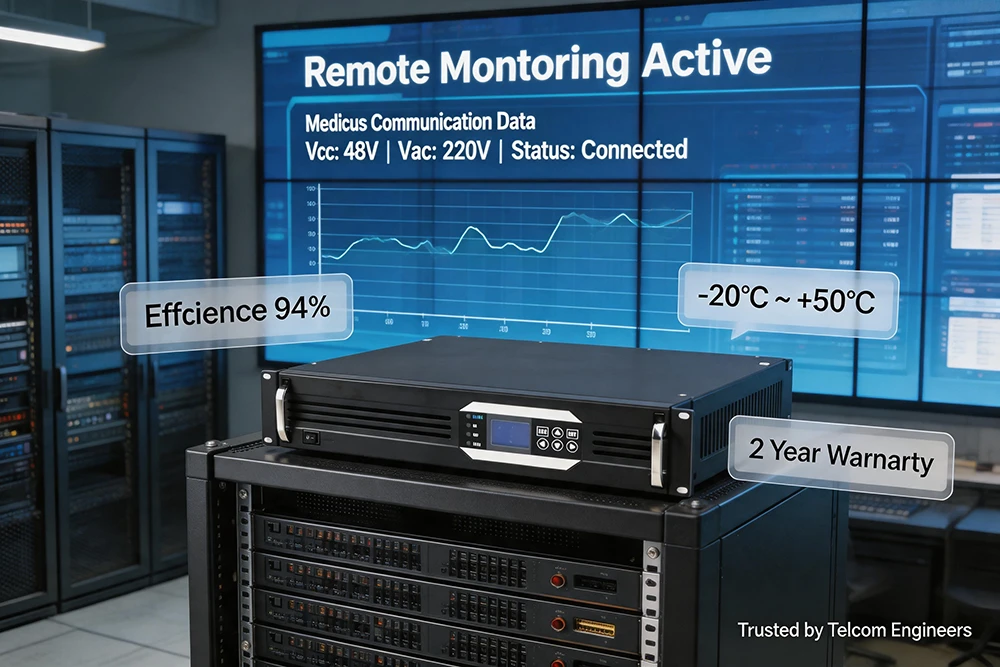
With peak efficiency up to 94%and no‑load current as low as 0.5A(48V model),Voltruc inverters maximize battery runtime—critical during grid outages.
Comprehensive Protection
Every Voltruc unit features full protection including input reverse polarity,output short circuit,over-temperature,and intelligent battery low-voltage disconnect programmable by users.
Remote Management Ready
Voltruc provides optional remote monitoring kits with Modbus RTU over RS485 and dry contact alarms.You can monitor voltage,current,temperature,and fault status from your NOC.
Proven Reliability
Thousands of Voltruc inverters are deployed in mobile base stations,microwave links,and rural telecommunication networks worldwide.Backed by a 2‑year warranty and responsive technical support.
Final Verdict
Choosing the right Telecom Inverter comes down to matching your DC system voltage,ensuring pure sine wave output,rating for surge loads,and verifying environmental durability.Avoid consumer-grade inverters—they will fail prematurely in telecom environments.
For a balance of performance,smart features,and long‑term reliability,Voltruc offers some of the best telecom inverters on the market.Whether you are upgrading an existing site or building new infrastructure,Voltruc provides a model tailored to your needs.
👉[Visit Voltruc’s official website]to explore their Telecom Inverter lineup and request a quote for your project.