
In today’s modern world,electricity powers almost everything we do—from home appliances to industrial machinery.But not all electrical devices run on the same type of current.This is where the inverter plays a crucial role.Understanding the functions and roles of an inverter is essential for anyone looking to optimize energy usage,ensure equipment compatibility,or set up reliable power systems.
What Is an Inverter?
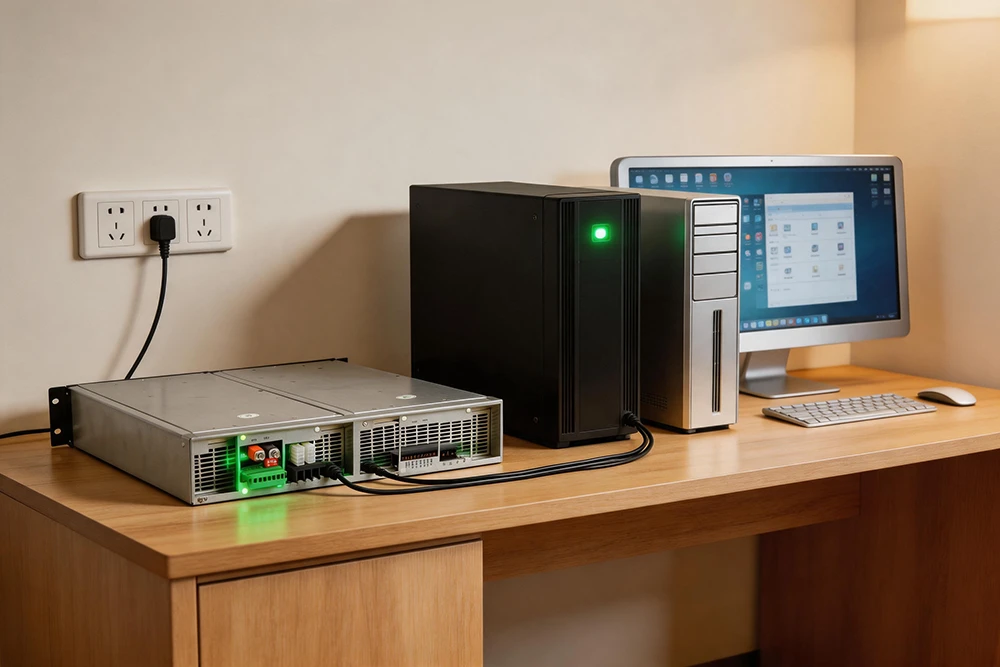
An inverter is an electronic device that converts direct current(DC)into alternating current(AC).DC electricity flows in one direction and is typically produced by batteries,solar panels,or fuel cells.AC electricity,on the other hand,changes direction periodically and is the standard form of power supplied by utility grids and used by most household and industrial appliances.By converting DC to AC,an inverter makes it possible to run standard devices from DC sources.
Primary Functions of an Inverter
The core functions and roles of an inverter go beyond simple DC-to-AC conversion.Here are the key functions:
1.DC to AC Power Conversion
This is the fundamental function.The inverter takes low-voltage DC(e.g.,12V,24V,or 48V from a battery bank)and converts it into stable AC power(typically 110V,120V,or 230V at 50/60 Hz)that matches grid power specifications.
2.Voltage and Frequency Regulation
Modern inverters not only convert but also regulate output voltage and frequency to ensure a stable power supply.This protects sensitive electronics from fluctuations and damage.
3.Waveform Shaping
Inverters produce different types of AC waveforms:
- Modified sine wave:Suitable for simple devices like lights and heaters.
- Pure sine wave:Identical to grid power,required for sensitive equipment such as medical devices,computers,and variable-speed motors.Pure sine wave inverters are more efficient and widely preferred.
4.Battery Charging(in Hybrid/Off-Grid Inverters)
Many inverters include a built-in battery charger.When grid power is available,they charge connected batteries;when grid power fails,they automatically switch to battery mode,providing uninterrupted AC power.
5.Grid Synchronization(for Grid-Tie Inverters)
In solar power systems,grid-tie inverters synchronize the phase and frequency of the generated AC with the utility grid,allowing excess power to be fed back into the grid.
Roles of an Inverter in Different Settings
The roles of an inverter vary widely depending on the application.Here are the most common scenarios:
1.Renewable Energy Systems
Solar panels generate DC power.An inverter is mandatory to convert that DC into usable AC for homes or businesses.Without it,solar energy cannot power standard appliances or feed into the grid.
2.Uninterruptible Power Supplies(UPS)
In a UPS,the inverter takes over instantly when mains power fails,converting battery DC into AC to keep computers,servers,medical equipment,and security systems running without interruption.
3.Off-Grid and Backup Power
Cabins,RVs,boats,and remote communication towers often rely on battery banks charged by solar,wind,or generators.Inverters provide the AC power needed for lights,refrigerators,pumps,and entertainment systems.
4.Electric Vehicles(EVs)
EVs run on high-voltage DC battery packs.An inverter converts DC to AC to drive the traction motor.It also controls motor speed and torque via variable frequency output.
5.Industrial Motor Drives
Variable frequency drives(VFDs)are specialized inverters that control AC motor speed by varying the output frequency,saving energy in pumps,fans,and conveyors.
6.Home Appliances
Some modern appliances like inverter air conditioners,refrigerators,and washing machines use built-in inverter technology to vary compressor speed,resulting in quieter operation,lower energy consumption,and longer lifespan.

Application Areas of Inverters
To fully appreciate the functions and roles of an inverter,looking at real-world applications helps:
- Residential:Solar home systems,backup power during outages,running well pumps and kitchen appliances.
- Commercial:Data center UPS,elevator drives,LED lighting systems,HVAC controls.
- Industrial:Conveyor belts,CNC machines,pumps,fans,compressors.
- Telecommunications:Powering base stations and relay towers in remote locations.
- Healthcare:Critical backup power for life-support devices and diagnostic equipment.
- Transportation:Electric trains,buses,and marine propulsion systems.
Choosing the Right Inverter
When selecting an inverter,key parameters include power rating(continuous vs.surge),input voltage(12V/24V/48V),output waveform(pure sine wave preferred),efficiency,and additional features like remote monitoring,overload protection,and cooling.
Why Quality Matters:Voltruc Inverters
A reliable inverter is the backbone of any power system.Poor-quality inverters may overheat,fail under load,or damage connected devices.That’s why choosing a trusted brand is critical.Voltruc offers high-performance inverters known for excellent build quality,robust protection features,and efficient pure sine wave output.Whether you need an inverter for home backup,solar integration,or mobile applications,Voltruc delivers with fast turnaround times and dependable service—ensuring you get the right solution when you need it most.
Conclusion
The functions and roles of an inverter extend far beyond simple conversion—they are essential for energy flexibility,equipment compatibility,and system reliability.From solar farms to RV adventures,inverters enable modern life to run on DC sources seamlessly.When selecting an inverter,prioritize quality and performance.Voltruc stands out as a reliable partner,offering superior inverters with quick delivery to keep your projects on track.