
The global HMI touch screen market is experiencing significant growth,with the market size estimated at USD 2.3 billion in 2025 and a projected CAGR of 9.10%.As industries from factory automation to medical equipment increasingly rely on intuitive operator interfaces,selecting the right hmi display touch screen has become more critical than ever.Whether you are upgrading an existing system or building new equipment,here are the top five factors to evaluate before making your purchase.
1.Display Size and Resolution
The size of your hmi display touch screen directly impacts operator efficiency and visibility.Small panels(3.5–4.3 inches)work well for compact machines,while 7–10-inch HMIs are ideal for industrial automation displays that present multiple parameters simultaneously.Larger formats(12 inches and above)suit complex data visualization in control rooms.Resolution matters too—higher pixel density ensures clear graphics,especially for detailed schematics or high-volume data monitoring.
2.Touch Technology
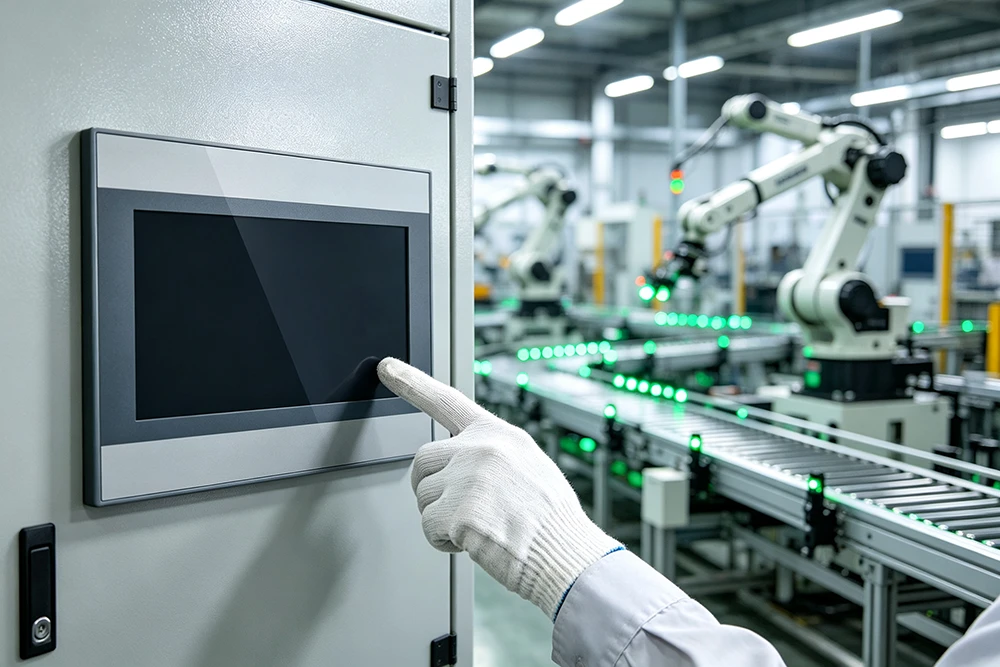
Modern hmi display touch screen panels predominantly use projected capacitive(PCAP)technology,the same used in smartphones and tablets.PCAP offers superior multi-touch capability,faster response times,and better optical clarity compared to resistive touch.For industrial environments,look for anti-glare coatings and IP-rated front panels that resist water,dust,and debris.
3.Environmental Durability
Industrial hmi display touch screen units must withstand harsh conditions—temperature extremes,humidity,vibration,and chemical exposure.Check protection ratings:an IP66 front panel ensures reliable operation even with wet fingers or splashes.Ruggedized designs with extended operating temperature ranges are essential for outdoor or heavy-manufacturing applications.
4.Communication Interfaces and Compatibility
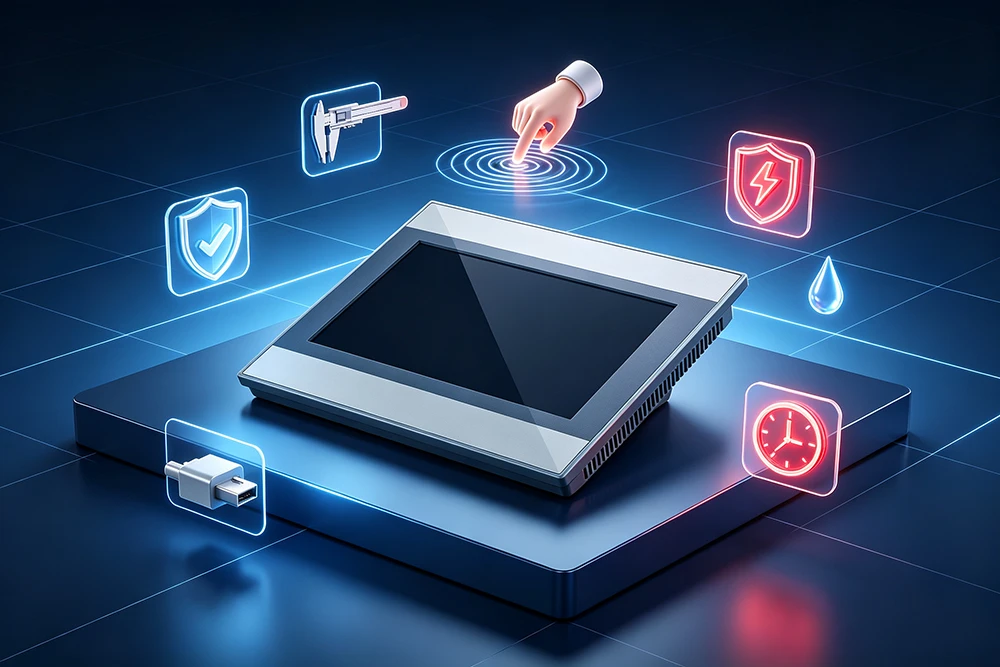
Your hmi display touch screen needs to communicate seamlessly with PLCs,drives,and other control equipment.Common protocols include Modbus,Ethernet/IP,and CAN.Ensure the HMI supports the interfaces your existing infrastructure requires—Ethernet ports,RS232,RS485,and USB are standard must-haves.
5.Supplier Reliability and Lead Times
Perhaps the most overlooked factor is supply chain reliability.A hmi display touch screen is a critical component;production delays from slow suppliers can halt your entire operation.Choose a vendor with a proven track record of fast shipping and consistent availability across multiple sizes.
Why Voltruc Stands Out for HMI Display Touch Screen Solutions
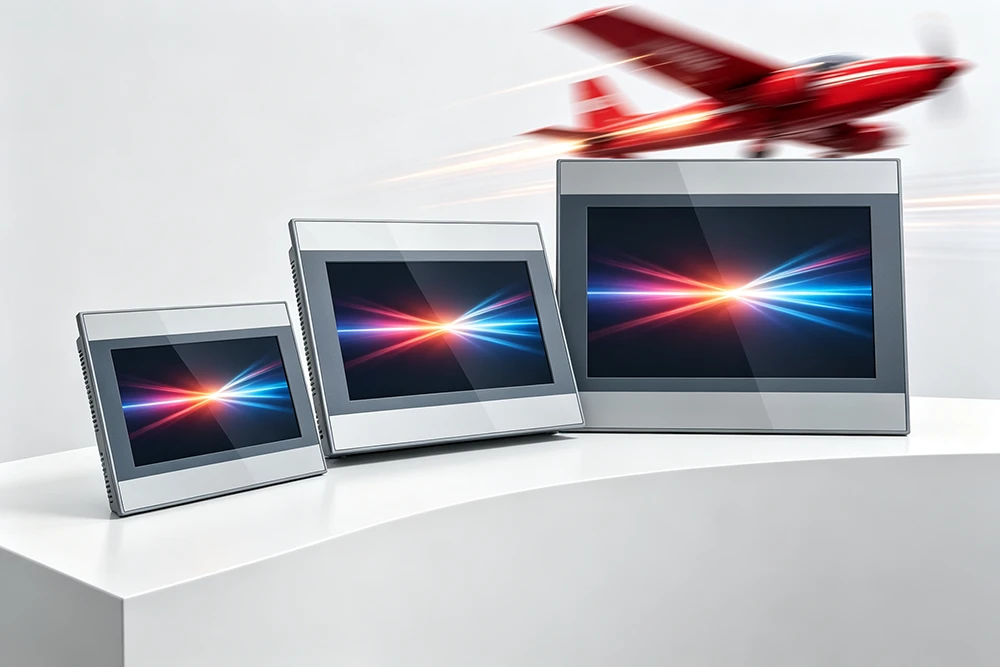
When your project demands a reliable hmi display touch screen,Voltruc delivers where it matters most.Voltruc offers an extensive range of hmi display touch screen sizes to match any application—from compact 4.3-inch panels for space-constrained equipment to large-format displays for comprehensive control rooms.Whatever your specification,Voltruc has the right hmi display touch screen ready to go.
What truly sets Voltruc apart is speed.In an industry where downtime equals lost revenue,Voltruc’s fast shipping ensures your hmi display touch screen arrives when you need it—not weeks later.No long lead times,no production bottlenecks.Just quality hmi display touch screen solutions delivered quickly.
For your next industrial automation or equipment control project,choose Voltruc.With a wide selection of sizes and rapid delivery,Voltruc makes finding the perfect hmi display touch screen simple and stress-free.