
Selecting the right Human-Machine Interface(HMI)for your industrial application is one of the most consequential decisions in automation design.The HMI is where operators meet the machine,where data leaves the equipment for SCADA and MES systems,and increasingly,where the machine connects to the enterprise and the cloud.Yet many OEMs treat HMI selection as an afterthought—chosen late in the project based on panel cutout size or controller brand.This approach creates integration problems at commissioning and misses opportunities for operational efficiency.
Here’s what you need to consider when evaluating an HMI for your next application.
Screen Size and Form Factor Matter
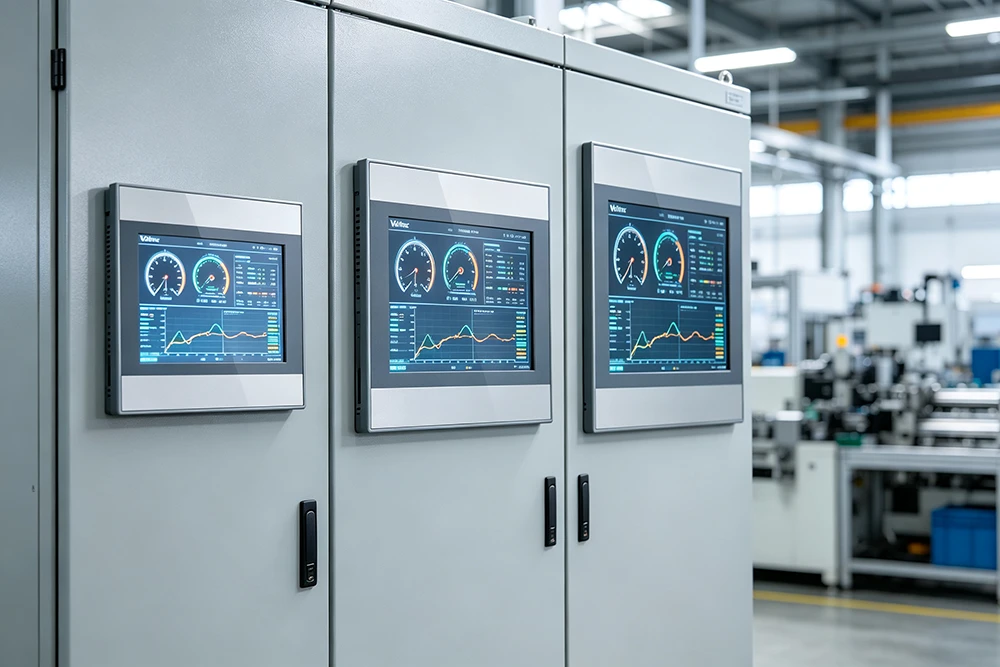
Your HMI application dictates the screen size you need.Smaller panels(4.3″to 7″)work well for compact machinery and localized control stations.Mid-size screens(10″to 12″)are ideal for most manufacturing applications,offering enough real estate for process visualization without overwhelming the operator.Larger panels(15″and above)suit complex systems with multiple data streams,such as packaging lines or energy management dashboards.
Modern HMI applications also demand multi-touch capabilities.Multi-touch is beginning to penetrate the plant floor,creating new forms of interaction between humans and machines.When evaluating an HMI,consider whether resistive touch(compatible with gloves)or projected capacitive touch(more responsive,like a smartphone)better suits your operational environment.
Performance Tiers:Economy,Standard,and Premium
Not every HMI application requires the same level of performance.A solid HMI portfolio offers three tiers to match different use cases:
Economy models are budget-friendly options for basic monitoring and control applications where advanced features aren’t necessary.These work well for simple machinery with limited data visualization requirements.
Standard models deliver balanced performance for most industrial automation applications—reliable processing,good display quality,and essential connectivity.
Premium models provide high-performance computing,advanced graphics,larger memory,and support for complex applications like AI-driven predictive maintenance and real-time data analytics.
Selecting the right tier ensures you’re not overpaying for features you don’t need while maintaining the capability to scale as your application grows.
PLC Compatibility Is Non-Negotiable
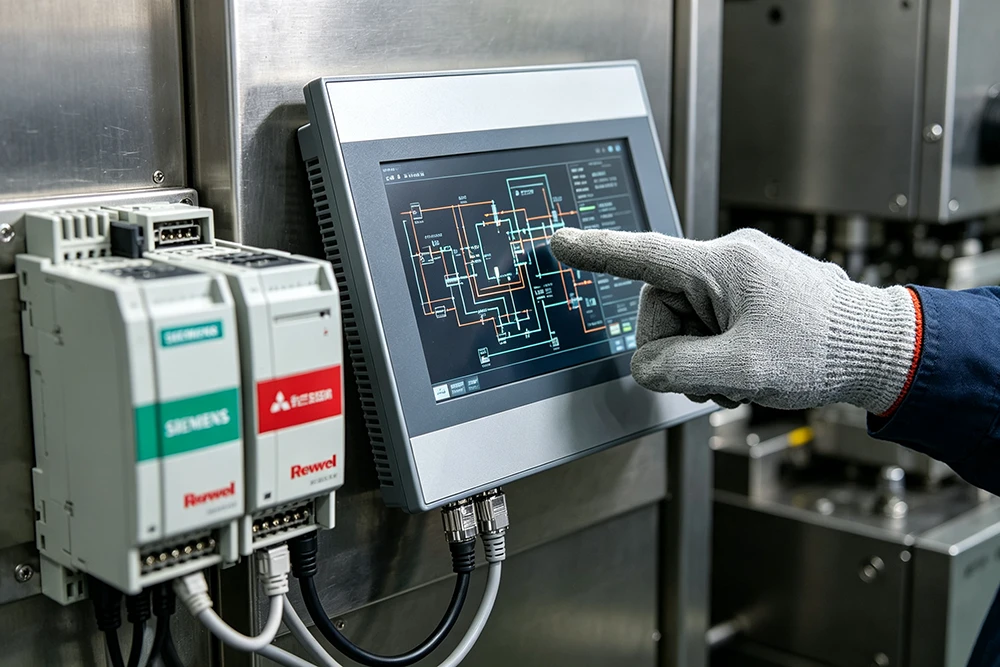
One of the biggest headaches in HMI application deployment is communication compatibility.Your HMI must speak the same protocol as your programmable logic controller(PLC).Whether you’re using Siemens,Mitsubishi,Allen-Bradley,Omron,or other major brands,the HMI must support the necessary drivers.
Many modern HMIs support hundreds of industrial communication protocols,including OPC UA,Modbus TCP,EtherNet/IP,and PROFINET.This multi-protocol support eliminates the need for gateways or protocol converters,simplifying your control cabinet and reducing integration costs.
Delivery Speed Keeps Projects on Schedule
In today’s fast-paced industrial environment,long lead times can derail entire projects.When evaluating HMI suppliers,delivery speed is a critical factor.Fast delivery times mean you can respond quickly to customer demands,avoid production delays,and maintain project momentum.

Why Voltruc HMIs Stand Out
For engineers and OEMs seeking a reliable HMI solution,Voltruc offers a comprehensive product line designed for real-world applications.Voltruc HMIs are available in multiple screen sizes and configurations to match any application requirement.The product portfolio spans economy,standard,and premium models—allowing you to select the right performance level without over-specifying.
What sets Voltruc apart is its broad PLC compatibility.Voltruc HMIs are engineered to communicate seamlessly with a wide range of PLC brands,eliminating integration headaches and reducing engineering overhead.And with fast delivery times,Voltruc keeps your projects on track when every day counts.
Whether you’re building a simple machine interface or a complex industrial automation system,choosing the right HMI for your application starts with understanding your requirements—and selecting a partner that delivers quality,compatibility,and speed.