
When you plug your laptop into a car’s cigarette lighter socket,or when sunlight hits the solar panels on your roof,there’s an invisible hero quietly working behind the scenes:the inverter.But what exactly does it do,and why is it so important in today’s energy landscape?
In simple terms,an inverter is an electronic device that converts direct current(DC)into alternating current(AC).This fundamental transformation makes DC power from batteries and solar panels usable for the AC-powered appliances,motors,and grids that dominate our daily lives.
In this comprehensive guide,we’ll explore the technical purpose of inverters,how they work,where they’re used,and why choosing the right inverter—like those from Voltruc—can make all the difference for your power system.
What Is the Purpose of an Inverter?The Core Answer
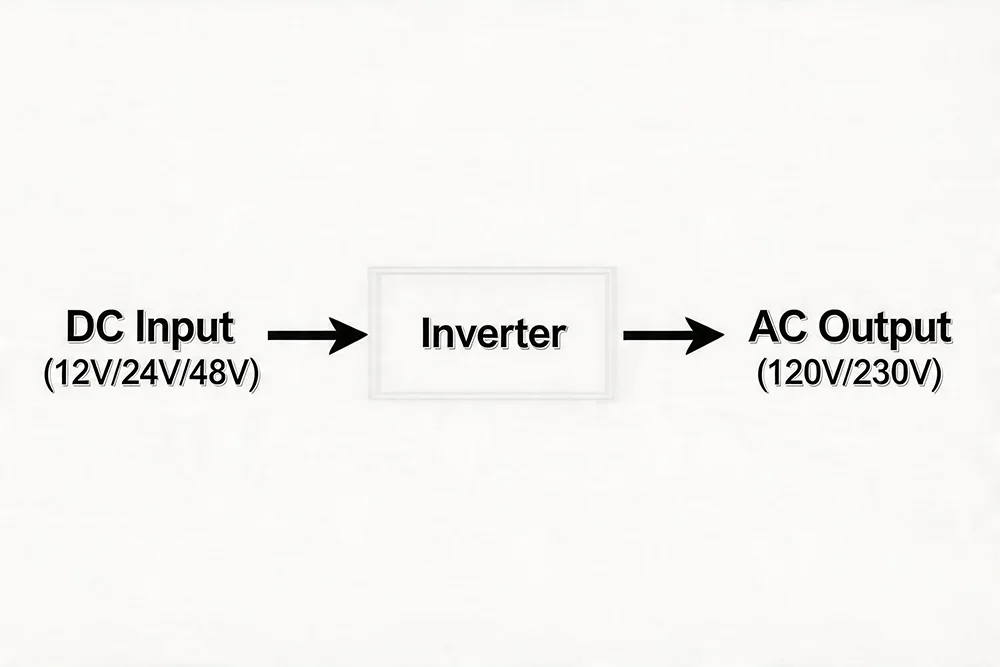
At its most basic level,the purpose of an inverter is DC-to-AC power conversion.Batteries store energy as direct current—electricity that flows steadily in one direction.Solar panels generate DC electricity.However,most household appliances(refrigerators,TVs,washing machines),industrial equipment,and the utility grid itself run on alternating current—electricity that reverses direction many times per second.
The inverter bridges this gap.It takes the DC input from a battery,solar array,or fuel cell and outputs AC power at the correct voltage and frequency(typically 120V/60Hz in the US or 230V/50Hz in Europe).Without inverters,the clean energy stored in batteries or generated by solar panels could not power the devices we rely on every day.
In short:inverters make stored and renewable energy usable.
How Does an Inverter Work?(Technical Yet Simple)
Understanding how an inverter works helps clarify its purpose even further.Modern inverters rely on semiconductor switching technology,primarily pulse-width modulation(PWM)and the H-bridge circuit.
Here’s the step-by-step process:
- DC Input:The inverter receives DC power from a battery or solar panel(e.g.,12V,24V,or 48V).
- Switching:Inside the inverter,power transistors like MOSFETs or IGBTs rapidly turn the DC input on and off thousands of times per second,creating a pulsed waveform.
- Waveform Shaping:Control circuits adjust the width of these pulses to mimic a smooth AC sine wave—the“clean”electricity that sensitive electronics require.
- Filtering:An LC filter smooths out high-frequency noise,producing a pure sine wave output.
- Voltage Transformation:A transformer steps up the voltage to the required level(e.g.,from 12V DC to 120V AC).
The result is clean,stable AC power that can safely run anything from a laptop to a refrigerator.Inverters that produce pure sine wave output are considered the gold standard because they put less stress on sensitive electronic components and motor-driven devices.
Beyond basic conversion,advanced inverters also perform functions like maximum power point tracking(MPPT)for solar systems,frequency and voltage regulation,and grid synchronization for feeding power back to the utility grid.
Key Applications of Inverters:Where They’re Used
Inverters are everywhere—often in places you wouldn’t expect.Here are the most common applications:
1.Solar Power Systems
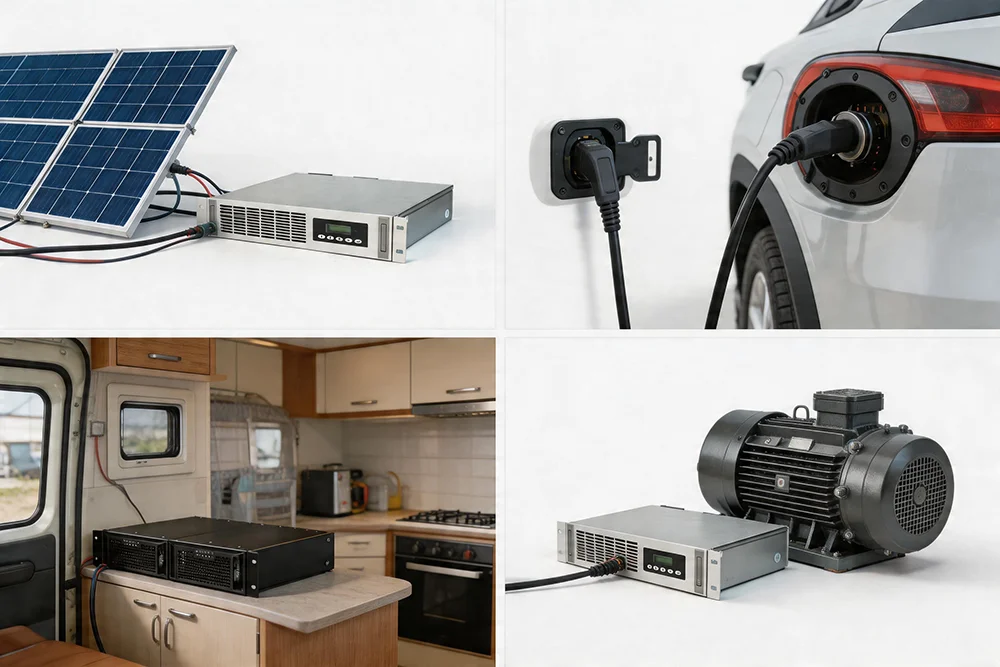
This is perhaps the most well-known use of inverters.Solar panels generate DC electricity,but your home runs on AC.The inverter converts the DC output from your panels into AC that can power your lights,appliances,and electronics—or be fed back into the grid.Modern solar inverters also include MPPT technology to maximize energy harvest from your panels.
2.Electric Vehicles(EVs)
EV batteries store DC power,but the traction motor that drives the wheels requires AC.A powerful inverter inside the vehicle converts battery DC into the variable-frequency AC needed to control motor speed and torque.Many EV inverters also support regenerative braking,converting AC from the motor back to DC to recharge the battery during deceleration.
3.Uninterruptible Power Supplies(UPS)
When the grid fails,a UPS switches instantly to battery power.The inverter inside the UPS converts battery DC into clean AC to keep computers,servers,medical equipment,and other critical devices running without interruption.
4.Industrial Motor Control(VFDs)
In factories and commercial buildings,variable frequency drives(VFDs)—which are essentially inverters—control the speed and torque of AC motors by adjusting the frequency of the output power.This can reduce energy consumption by 20 to 50 percent compared to traditional on/off or damper controls.
5.RVs,Boats,and Off-Grid Living
For anyone living or traveling off the grid,inverters are essential.They convert DC power from house batteries into AC to run standard appliances—microwaves,TVs,power tools,coffee makers—just like at home.
6.Home Battery Storage Systems
As home battery systems(like Tesla Powerwall or similar)become more popular,inverters play a central role in managing the flow of energy between solar panels,batteries,the home,and the grid.
Voltruc Inverters:Reliable Power Conversion for Every Need
When it comes to choosing an inverter for your solar system,RV,backup power setup,or industrial application,quality and reliability matter.Voltruc(also known as Voltronic Power)has established itself as a trusted name in the inverter industry,offering a comprehensive range of products backed by strong technical specifications and dependable performance.
Wide Power Coverage
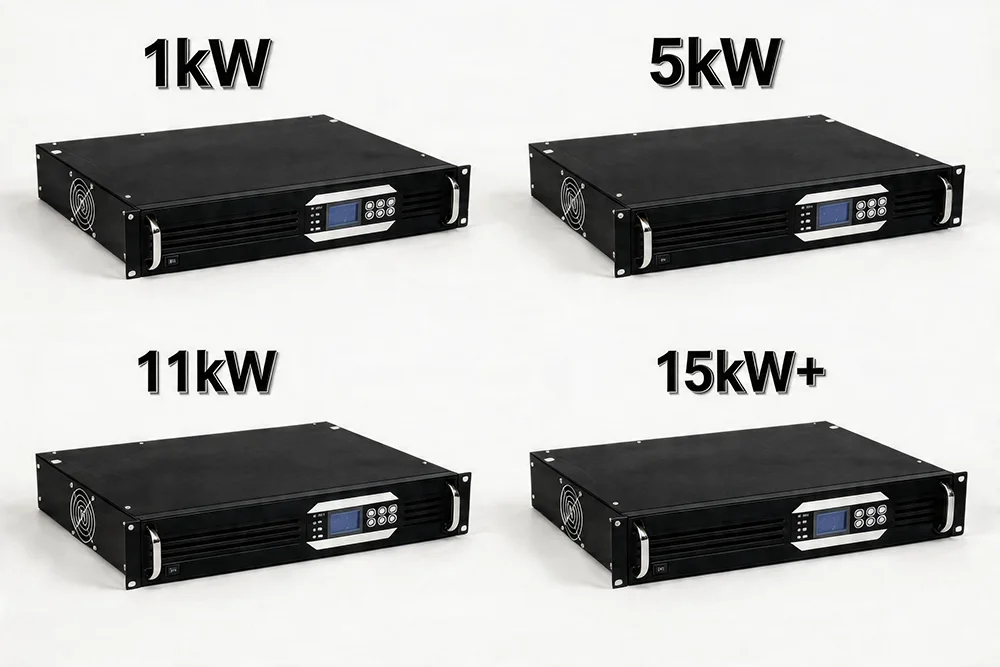
Voltruc inverters cover an exceptionally broad power range to suit virtually any application:
| Power Rating | Typical Application |
|---|---|
| 1,000W – 3,000W | Small homes, RVs, workshops |
| 5,000W – 6,000W | Residential solar systems, home backup |
| 8,000W – 11,000W | Large homes, small commercial sites |
| 15,000W+ | Commercial and industrial installations |
Quality You Can Trust
Voltruc inverters are engineered with robust semiconductor switching technology(MOSFETs and IGBTs)and advanced control circuits.They feature pure sine wave output,which ensures compatibility with even the most sensitive electronics—from laptops and medical devices to variable-speed refrigerators and pumps.
Key quality features across Voltruc’s product line include:
- High conversion efficiency(93%–98%peak)
- Built-in MPPT solar charge controllers for maximum energy harvest
- Comprehensive protection:overload,short circuit,over-temperature,and over-voltage
- Parallel operation capability for scalable power
- LCD displays and Wi-Fi monitoring for real-time system visibility
Fast Lead Times and Reliable Delivery
For system integrators,installers,and businesses,supply chain reliability is critical.Voltruc maintains efficient production and distribution channels,ensuring that customers receive their inverters quickly—whether ordering single units for a residential project or bulk quantities for commercial deployments.
Why Choose Voltruc?
| Feature | Benefit |
|---|---|
| Broad power range (1kW – 15kW+) | One solution for any project size |
| Pure sine wave output | Safe for all appliances and electronics |
| High efficiency (93%–98%) | Lower energy loss, reduced electricity bills |
| Integrated MPPT solar charging | Maximized solar harvest |
| Parallel operation | Scalable from 1kW to tens of kilowatts |
| Fast delivery | Minimized project delays |
| Competitive pricing | Excellent value for performance |
Whether you’re installing a residential solar system,building an off-grid cabin,upgrading your RV’s electrical system,or managing a commercial facility,Voltruc inverters deliver the performance,reliability,and value you need.
How to Choose the Right Inverter for Your Needs
When selecting an inverter,consider these key factors:
- Power rating–Calculate your total continuous and surge wattage requirements.Motors(refrigerators,pumps,air conditioners)often require 2–3x their running wattage to start.
- Input voltage–Match the inverter’s DC input voltage to your battery bank(12V,24V,or 48V).
- Output waveform–Always choose pure sine wave unless you’re only running very simple resistive loads(like incandescent lights or heating elements).
- Additional features–MPPT solar charging,grid-tie capability,battery charging,and monitoring software add significant value.
Voltruc inverters check all these boxes,with pure sine wave output standard across the product line and flexible input voltage options to match virtually any battery configuration.
Conclusion
The purpose of an inverter is fundamental yet far-reaching:to convert DC power from batteries,solar panels,and other sources into the AC power that runs our homes,businesses,and devices.From solar energy systems and electric vehicles to industrial motor control and emergency backup,inverters are the unsung heroes of modern electricity.
When you need a reliable,high-performance inverter for your project,look no further than Voltruc.With an extensive power range spanning from 1kW to over 15kW,pure sine wave output,advanced MPPT capabilities,fast lead times,and proven quality,Voltruc inverters deliver the power conversion you can count on.
Ready to power your world?Explore Voltruc’s full inverter lineup and find the perfect match for your application today.