
If you’ve ever shopped for power equipment,you’ve probably come across two devices that sound confusingly similar:the converter and the inverter.Many people mistakenly use these terms interchangeably,but they serve fundamentally different purposes.Choosing the wrong one can lead to inefficient power usage,damaged electronics,or even system failure.
In this guide,we’ll break down exactly what each device does,compare them side by side,explore real-world applications,and help you determine which one—or both—your system requires.We’ll also introduce you to Voltruc,a trusted brand known for high-quality inverters and converters with an exceptionally wide power range.
Understanding AC vs DC Power:The Foundation
Before diving into converters and inverters,it helps to understand the two main types of electrical current.
AC(Alternating Current)periodically reverses direction.It’s the standard electricity supplied by utility grids and used by most household appliances like refrigerators,microwaves,televisions,and air conditioners.AC is efficient for long-distance transmission,but it cannot be stored.
DC(Direct Current)flows in one consistent direction.Batteries,solar panels,and fuel cells all produce DC power.Unlike AC,DC electricity can be stored,making it ideal for off-grid living,RV camping,and backup power systems.
Because most household appliances run on AC while batteries and solar panels produce DC,we need devices to bridge this gap.That’s where converters and inverters come in.
What Is a Converter?
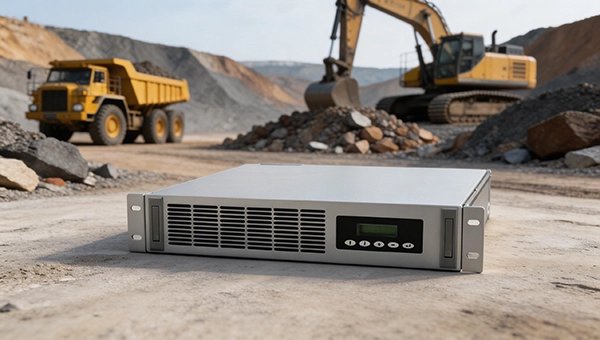
A converter is an electronic device that modifies electrical power from one form to another.Its primary function is to change voltage levels or convert AC to DC(or DC to a different DC voltage).
Core Functions of a Converter
Converters do far more than simple power transformation.Their key functions include:
- AC to DC conversion(rectification):Converting mains AC to DC to charge batteries or power DC-only circuits.
- DC to DC conversion:Changing one DC voltage to another—for example,stepping down 48V to 12V for LED lights.
- Voltage regulation:Stepping voltage up or down to match device requirements.
- Battery charging:Converting shore power or grid electricity into DC for charging batteries.
- Power stabilization:Delivering consistent,regulated output to protect sensitive electronics.
Common Types of Converters
- AC to DC Converter(Rectifier):Converts alternating current from the grid to direct current for charging batteries or running DC appliances.
- DC to DC Converter(Buck/Boost):Steps DC voltage down(buck)or up(boost)depending on the load’s requirements.
- AC to AC Converter:Adjusts AC voltage levels for stable power supply in systems with varying energy demands.
Typical Applications of Converters
- RV and camper power centers(converting shore AC to 12V DC for lights and battery charging)
- Battery chargers and power supplies for consumer electronics
- Telecommunications equipment
- Industrial machinery and LED drivers
What Is an Inverter?
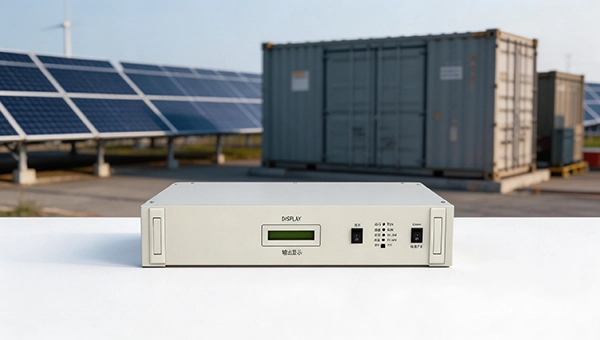
An inverter is an electronic device that converts direct current(DC)into alternating current(AC).It allows you to operate standard household appliances using power from batteries,solar panels,or other DC sources.
How an Inverter Works
An inverter takes DC input from a battery or solar panel,processes it through high-speed switching circuits,and outputs AC power with the appropriate voltage and frequency.Modern inverters use Pulse Width Modulation(PWM)to shape the AC waveform and ensure clean,stable output.
Types of Inverter Waveforms
- Pure Sine Wave:The most efficient and stable form,closely resembling grid electricity.Essential for sensitive electronics like medical devices,motors,and audio equipment.
- Modified Sine Wave:A more budget-friendly option that works well with many household appliances but may not be suitable for highly sensitive equipment.
- Square Wave:The simplest and least efficient type,mainly used for basic devices with minimal power requirements.
Typical Applications of Inverters
- Solar energy systems(converting solar panel DC to AC for home use)
- RV and off-grid living(running household appliances from battery power)
- UPS and backup power systems
- Portable power stations
- Vehicle and marine installations
Side-by-Side Comparison:Converter vs Inverter
| Feature | Converter | Inverter |
|---|---|---|
| Primary Function | Changes voltage or converts AC ↔ DC (commonly AC → DC / DC → DC) | Converts DC → AC |
| Input Type | AC or DC | DC only |
| Output Type | AC or DC (depends on type) | AC |
| Power Flow Direction | Grid/Battery → DC loads | Battery → AC loads |
| Typical Applications | Battery charging, DC loads, voltage regulation | Running household appliances from batteries, solar output |
| Also Called | Rectifier (AC→DC), DC-DC regulator | Power inverter |
| Key Spec to Check | Output voltage/current, conversion efficiency | Continuous & surge power (W), waveform type |
| Cost & Complexity | Lower, simpler circuits | Higher, more advanced control |
The Key Difference in One Sentence
A converter typically transforms AC to DC(or changes DC voltage levels),while an inverter converts DC to AC.
If your power source is a battery or solar panel and your appliances require AC power,you need an inverter.If your power source is AC(shore power or grid)and your devices or batteries need DC power,you need a converter.
Real-World Applications
RVs and Campers
In RVs,you’ll commonly find both devices working together:
- Converter:When plugged into shore power,it converts 120V AC to 12V DC to run lights,water pumps,and other DC systems while recharging the house battery.
- Inverter:When you’re boondocking(off-grid with no shore power),it converts the 12V DC from your battery into 120V AC to run microwaves,TVs,laptops,and CPAP machines.
Solar Power Systems
Solar panels output DC electricity.A charge controller and DC-DC converter regulate the voltage and store energy in batteries.An inverter then converts the stored DC into AC for household loads.For fully integrated solutions,hybrid inverter/charger units combine both functions.
UPS and Backup Power
UPS systems include an inverter(DC battery→AC)and often a charger/converter(AC→DC)to keep the battery topped when mains power is present.When mains fails,the inverter kicks in instantly to provide AC backup.
How to Choose:Converter,Inverter,or Both?
Choose an Inverter If:
- Your power source is DC(battery,solar panel)
- Your load requires AC power
- You need backup or off-grid power for household appliances
- You’re running a solar energy system
Choose a Converter If:
- You need voltage regulation(stepping up or down)
- You are charging batteries from an AC source
- Your system runs entirely on DC(LED lights,control circuits,electronics)
Use Both If:
- Designing an RV or camper power system
- Building a solar+battery energy storage system
- Creating a complete off-grid home setup
- Integrating renewable energy with grid power
Voltruc:High-Quality Inverters and Converters for Every Power Need
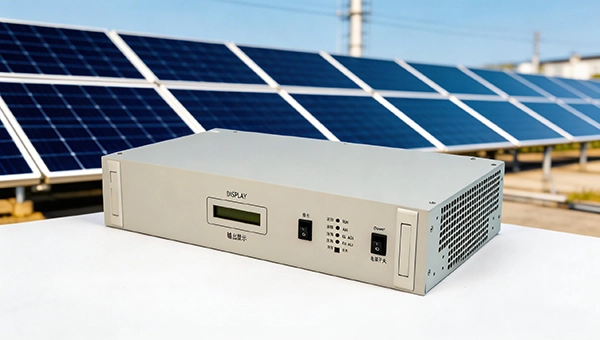
When it comes to reliable power conversion equipment,Voltruc stands out as a brand that combines quality craftsmanship with an exceptionally wide power range.Whether you need a small 300W inverter for weekend camping trips or a heavy-duty 50kW+unit for commercial solar installations,Voltruc has a solution that fits.
Why Choose Voltruc?
- Superior Build Quality:Voltruc inverters and converters are engineered with premium components and rigorous quality control,ensuring long-term reliability even in demanding environments.
- Wide Power Coverage:From compact 300W portable inverters ideal for car camping to industrial-grade 50kW hybrid inverters for large-scale solar and energy storage systems,Voltruc offers products across the entire power spectrum.
- Pure Sine Wave Technology:For sensitive electronics like medical devices,modern appliances with motors,and audio equipment,Voltruc’s pure sine wave inverters deliver clean,grid-quality AC power that won’t cause noise,inefficiencies,or compatibility issues.
- Advanced Features:Many Voltruc models include built-in WiFi for mobile monitoring,MPPT solar charge controllers for maximum solar harvesting efficiency,parallel operation capability(up to 6 units),and user-friendly LCD interfaces.
- Versatile Applications:Whether you’re outfitting an RV,building a residential solar system,setting up an off-grid cabin,or managing a commercial energy storage project,Voltruc has the right power conversion equipment for the job.
Popular Voltruc Products
- Portable Power Inverters(300W–2000W):Perfect for car camping,truck driving,and small off-grid setups—runs laptops,CPAP machines,small TVs,and phone chargers on the go.
- Pure Sine Wave Solar Inverters(3kW–15kW):Ideal for home solar systems,these inverters convert DC from solar panels into clean AC for household use,with built-in MPPT for optimal efficiency.
- Commercial&Industrial Hybrid Inverters(30kW–50kW+):Designed for large-scale solar installations and energy storage systems,these units feature advanced battery management,parallel operation,and robust weatherproof enclosures(IP66-rated).
- DC-DC Converters:Available in various input/output configurations(12V to 24V,48V to 12V,etc.)for automotive,marine,and industrial applications where voltage regulation is required.
Pro Tip:When shopping for a power inverter,always look for pure sine wave models if you plan to run sensitive electronics.Check both continuous and surge power ratings—many appliances draw 2–3 times their running wattage during startup.And make sure your inverter or converter is properly sized for your battery bank to avoid premature wear.
Conclusion
Understanding the difference between a converter and an inverter is essential for anyone working with off-grid power,RVs,solar systems,or backup energy solutions.Remember the simple rule:
- Converter:AC→DC(or DC voltage adjustment)—for charging batteries and running DC devices
- Inverter:DC→AC—for running household appliances from batteries
Many modern systems require both devices to function properly.An RV,for example,needs a converter to charge its batteries when plugged into shore power,and an inverter to run AC appliances when off-grid.
When you’re ready to invest in power conversion equipment,choose a brand you can trust.Voltruc delivers high-quality inverters and converters backed by solid engineering,with power ranges that scale from lightweight portable units to heavy-duty commercial systems.Visit the Voltruc website today to explore their full product lineup and find the perfect solution for your power needs.